Make cities and human settlements inclusive, safe, resilient and sustainable
This goal is designed to be met by addressing individual, community, and regional needs. For example, targets include providing access for all to adequate, safe and affordable housing and basic services as well as safe, affordable, accessible and sustainable transport systems; enhancing inclusive and sustainable urbanization; protecting and safeguarding the world’s cultural and natural heritage; protecting the poor and people in vulnerable situations; reducing the adverse per capita environmental impact of cities; providing universal access to safe, inclusive and accessible, green and public spaces; strengthening national and regional development planning; and, adopting and implementing integrated policies and plans towards inclusion, resource efficiency, mitigation and adaptation to climate change, and resilience to disasters. See below for Penn State’s work on the targets and indicators for this goal.
Learn more about Penn State’s progress on all the Sustainable Development Goals on the SDG Progress page.

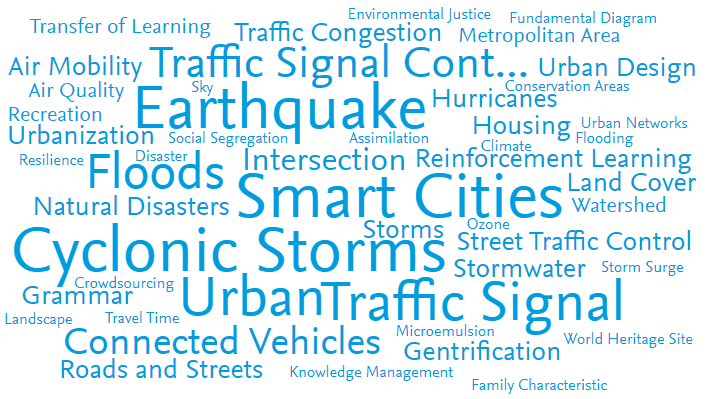
Source: SciVal.com | This word cloud was created using publications from Penn State researchers
Related News
New tool to help decision makers navigate possible futures of the Colorado River
The Colorado River is a vital source of water in the Western United States, providing drinking water for homes and irrigation for farms in seven states, but the basin is under increasing pressure from climate [...]
Building a flexible and affordable electric-vehicle charging station
For fourth-year student Jonathan Smith, coming to Penn State was a no-brainer. His parents attended Penn State Harrisburg, and he lived in the Berks County area, so he knew early on where he wanted to [...]
Public pressure influences whether companies reduce their environmental impact
The effectiveness of national voluntary programs asking companies to pledge to lower their pollution and greenhouse gas emissions depends on pressure from the public, according to a new study led by a Penn State researcher. [...]
Long-distance friendships may provide conservation benefits
While sustaining friendships from afar can be challenging, they may offer unexpected benefits for environmental conservation. These long-distance social ties can positively influence community-based conservation, according to a new study by an international team that [...]
Targeted coal plant closures may boost environmental, health outcomes
Prioritizing closing coal-fired power plants near vulnerable communities could significantly improve air quality and public health outcomes, according to a new multi-institutional study. Using advanced computational modeling, the researchers found that existing strategies for retiring [...]
Board committee recommends selecting developer to build new student housing
UNIVERSITY PARK, Pa. — The Penn State Board of Trustees Committee on Finance and Investment voted Nov. 7 to move forward with a recommendation to the full board to select a developer to build a [...]
Supporting Evidence
Yes, Penn State provides public access to buildings, monuments and natural heritage landscapes of cultural significance. Policy AD68 University Access Policy states “It is the policy of The Pennsylvania State University to preserve an open access environment” and outlines how special access areas (granted when access to facilities cannot be achieved via established locking and unlocking schedules) can be accessed by faculty, staff, students and representatives of organizations having contractual agreements with the University.
The University preserves an open access environment and all significant buildings are open to the public from 8am to 5pm.
Buildings:
Old Main – the original Old Main building was completed in 1862, seven years after the university was founded, and provided housing for students and faculty alike, and contained the chapel, dining facilities, library, classrooms, laboratories, museum, and student association rooms. Today the building is the symbol of the University for alumni and visitors. On the walls of the main lobby are the Land Grant Frescoes painted by Henry Varnum Poor, one of America’s outstanding muralists.
University House – The home of 11 of the University’s 14 presidents from 1864 to 1970, it was designed by Evan Pugh as a country Georgian mansion–very similar in layout to those of the county’s ironmasters. There have been a number of alterations and renovations over the years, but the house is still a symbol of the hospitality of the University.
The Carnegie Building – The home of the College’s first library outside of Old Main was constructed in 1904. Trustee and steel magnate Andrew Carnegie was internationally known for donating library buildings to hundreds of communities and colleges. His one hundred thousand dollar bequest was made here on the condition that the legislature buy the books to fill it. After the opening of Pattee Library, Carnegie was converted to classroom and office use.
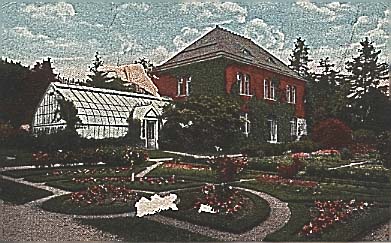
Old Botany (pictured below) – Built in 1887, it is the oldest building on campus whose exterior has not been altered over the years. It was designed by College Architect F. L. Olds in the “Richardsonian Romanesque” style that he also used in the Old Engineering building and the Armory. The most notable features are the large semicircular window on the east facade, eyelid dormers and terra cotta ornamentation on the ridge of the roof. The building first housed botany laboratories and had greenhouses attached and a formal garden in front, laid out by students in 1861. The interior is considerably altered and today is used for administrative offices.

Monuments

Photograph by Eldon McGraw from source.
Nittany Lion Shrine – On April 20, 1904, the Penn State nine (the nine members on the baseball team) were visiting Princeton for a baseball game. When freshman H. D. “Joe” Mason (class of 1907) was shown two Bengal tigers as an indication of the merciless treatment they would encounter, Joe responded with an instant fabrication of the Penn State Nittany Mountain Lion, who could overcome even Princeton’s tiger. The idea persisted over the years and Penn State’s athletic teams adopted the symbol. Confusion with the African Lion was common until the class of 1940 commissioned Heinz Warneke to sculpt the symbol as a class gift. Warneke worked under a tent on the Indiana Limestone at the site and on October 24, 1942 the shrine was dedicated and accepted by the College. It’s now the most recognized symbol of Penn State world-wide. Publicly accessible.
President Atherton’s Grave – George W. Atherton served twenty-four years–the longest tenure of any Penn State president. When Atherton arrived, the College was just emerging from almost twenty years of curricular disarray and two legislative investigations. Atherton’s tenure saw enrollment rise from 87 to 800, the first substantial buildings added, and a curricular direction established which continues today. President Atherton died on July 24, 1906 and was buried on the north side of Schwab Auditorium. In 1982 the University surrounded the marble slab with a small meditation courtyard backed by a granite wall bearing a likeness of Atherton and his surname in bronze letters. Publicly accessible.

Obelisk – The polylith, as it was originally called, is a geologic monument. It consists of samples of Pennsylvania building stone from throughout the state and was constructed in 1896. The effect on the virtuousness of passing coeds on its stability has been a favorite student tradition for many years. Publicly accessible.
Natural Heritage Landscapes: free and open to the public
The Arboretum at Penn State – The H.O. Smith Botanic Gardens and all other parts of the Arboretum are open to the public without charge. The Arboretum is a University facility for study, research, reflection, and enjoyment.
Shaver’s Creek Environmental Center – Shaver’s Creek provides free public access to an aviary, herpetarium, indoor bird-watching station, ponds, pollinator gardens, interpretive environmental learning, trails for hiking, spots for picnicking, and more.
Hort Woods – In 2001, Hort Woods earned “Heritage Grove” status through the University’s Heritage Trees and Groves policy, designed to protect specimen trees or groves on campus that have exceptional historic, cultural and aesthetic value at Penn State. In the 1800s, Hort Woods stretched from central campus to the Penn State Arboretum site. The original Hort Woods was cleared for construction. The remaining patch of land contains some surviving trees, or at least their progeny, in a 4-acre remnant patch of oak-hickory forest. The oldest trees in this grove existed prior to the start of campus construction in 1859. Hort Woods has long been considered an important campus green space. Publicly accessible.
More information about publicly accessible Penn State Landmarks can be found on this library Penn State Landmarks webpage.
Learn more about Penn State’s progress on the UN’s Sustainable Development Goals on the SDG Progress page HERE, and learn more about work on SDG 11 HERE.
Yes, Penn State provides public access to libraries that includes access to books and publications. All University libraries are open to the public.
Any resident of Pennsylvania can register to have an account to borrow from the library.
Pennsylvania residents who are not enrolled or employed by Penn State can register to use the library by creating a Penn State Account online and bringing Penn State Account information, including the 9-digit Penn State ID number, User ID and a current driver’s license or photo ID to any Penn State library.
After completing both steps and receiving a borrower card, card holders can borrow materials and renew and place holds online. A Penn State Account also allows Pennsylvania residents access to digital library resources on-site at any Penn State library.
Pennsylvania residents can learn how to register for a Penn State Library Borrower Card at https://libraries.psu.edu/services/borrow-renew/pennsylvania-residents.
In addition to free public access the libraries also provide instructional sessions to visiting groups free of charge.
Learn more about Penn State’s progress on the UN’s Sustainable Development Goals on the SDG Progress page HERE, and learn more about work on SDG 11 HERE.
All University museums and cultural sites have free public access. A University-wide Campus Arts Initiative supports public art indoors and outdoors on multiple campuses.
The University Park campus houses six museums and several art galleries.
The Palmer Museum of Art is the largest art museum between Pittsburgh and Philadelphia and the leading academic art museum in Pennsylvania. As part of Penn State’s mission in teaching, research, and public service, the Palmer offers free access to world-class art and programs for students, faculty, and the central Pennsylvania community. A vibrant and inclusive space, the museum inspires creativity, dialogue, and discovery through engaging exhibitions and hands-on learning experiences. Recognized nationally, the Palmer was named one of USA Today’s 10 Best New Museums of 2025
The Matson Museum of Anthropology at Penn State University is a vibrant teaching and research museum that explores the story of humankind—from our earliest ancestors to the diverse cultures of today. Located in the Susan Welch Liberal Arts Building, the museum features fascinating exhibits of fossil casts, archaeological artifacts, and cultural objects from around the world. It serves as an engaging space for students, researchers, and visitors to discover how humans have evolved, adapted, and created across time. Through its collections, educational programs, and community outreach, the Matson Museum promotes a deeper understanding of human diversity, cultural heritage, and our shared global history.
The Penn State All-Sports Museum celebrates the stories, legends, and achievements of Penn State’s intercollegiate athletics. Housed adjacent to Beaver Stadium, the museum brings to life the history of “Blue & White” athletes through curated exhibits, memorabilia, and narratives that honor the university’s sports tradition. The museum is open Tuesday–Saturday 10 a.m.–4 p.m., Sunday 12–4 p.m., and adjusts hours on football game weekends. It also offers group tours, Beaver Stadium tour coordination, and special events like birthday celebrations on site.
Earth and Mineral Sciences Museum and Art Gallery
The Earth & Mineral Sciences Museum & Art Gallery (EMS Museum & Art Gallery) at Penn State showcases the intersection of earth science, industry, and art. Located in the Deike Building on the University Park campus, it features exhibits drawn from the college’s research departments and the Steidle Collection of Industrial Art, which spotlight the visual and historical narratives of American industry and mineral science. The museum is free and open to the public, with summer hours Monday–Friday, 10 a.m. – 4 p.m.
The Frost Entomological Museum at Penn State is a dynamic research museum that connects visitors to the fascinating world of insects. As part of the Department of Entomology, it maintains an active collection of over 1,000,000 arthropod specimens representing more than 15,000 species. Through public exhibits, historical artifacts, and educational programming, the Frost Museum highlights insect biology, their relationships with humans, and how entomologists expand knowledge about biodiversity.
The Pasto Agricultural Museum at Penn State invites visitors to explore the intersection of science and rural history through its rich collection of agricultural artifacts. You’ll find tools, technologies, and exhibits highlighting practices in beekeeping, planting, harvesting, and animal husbandry especially from times before electricity and engines. Located at 2710 West Pine Grove Road, Gate K, Pennsylvania Furnace, PA, the museum’s programming connects historical agricultural life with current research and environmental issues
Mascaro-Steiniger Turfgrass Museum
The Mascaro-Steiniger Turfgrass Museum at Penn State, located at the Landscape Management Research Center in University Park, houses historic turf equipment dating back to the early 1900s. Opened in 1994, the collection began with work by agronomy professor emeritus Joseph Duich and honors two turfgrass pioneers: Thomas Mascaro and Eberhard Steiniger. The museum displays early turf tractors, the first triplex greens mower, rollers, seeders, a specialized rake for golf courses, and even one of the first power lawn mowers. Visits are by appointment.
Armsby Respiration Calorimeter Museum
The Armsby Respiration Calorimeter Museum at Penn State preserves a historic scientific facility built in 1899 to measure how much energy animals derive from food—tracking respiration, feed, water intake, and excretion. Originally used for agricultural and human nutrition experiments, the lab’s final trials were conducted in 1960. Restored in 1969 by the Agriculture Alumni Association, it now operates as a museum on Penn State’s “Ag Hill,” with visits available by appointment.
The Land-Grant Frescoes in Old Main’s lobby celebrate Penn State’s heritage and mission. Painted by artist Henry Varnum Poor beginning in 1940, the murals honor the 1862 Morrill Land-Grant Act and depict themes of agriculture, industry, education, and innovation. At the center stands Abraham Lincoln signing the Land-Grant Act, alongside a student planting a symbolic tree in front of the original Old Main. The surrounding panels show Penn State’s growth through mining, engineering, agriculture, student life, and academic pursuits. Originally commissioned by the Penn State Class of 1932, the frescoes span over 1,300 square feet and were expanded in the late 1940s. They were carefully restored in 2014, including cleaning, re-pigmentation, and installation of modern climate control and lighting to preserve their legacy
The Zoller Gallery at Penn State is a 2,200 sq ft exhibition space founded in 1971 and named after Edwin W. Zoller in recognition of his career as an artist and educator. It hosts exhibitions in many visual media including painting, sculpture, ceramics, photography, new media, and printmaking, and offers public programming like artist lectures, installations, interdisciplinary events, and residencies. The gallery typically operates Monday through Friday, 10 a.m. to 4 p.m., during the Fall and Spring semesters.
The Center for Arts & Crafts at Penn State is a long-standing creative hub (established in the early 1970s) offering non-credit art classes and workshops year-round to students, staff, and the public. You can learn or practice pottery, painting, drawing, printmaking, stained glass, and more. Many of the classes are taught by Penn State art majors, graduate students, and local professional artists. The main facility is in 003 Ritenour Building, with the ceramics studio located in the lower level of the HUB-Robeson Center. Their mission is to provide high-quality, inclusive creative programming that responds to cultural, educational, and recreational needs
The Patterson Gallery at Penn State is a dedicated exhibition space within the Broad Street Building, serving both the School of Visual Art and University Park’s artistic community. It presents curated shows spanning contemporary art, student work, and site-specific installations across media like painting, sculpture, video, and photography. The gallery hosts receptions, talks, and collaborative projects, fostering dialogue between artists, students, and the public while enhancing the visual arts experience on campus.
The HUB-Robeson Galleries at Penn State showcase contemporary art in the heart of campus, featuring rotating exhibitions in the HUB Gallery, Art Alley, and throughout the HUB-Robeson Center. Free and open to the public, the galleries encourage exploration, creativity, and dialogue through art while welcoming class visits, student groups, and community tours. Located at 241 HUB-Robeson Center, the galleries are open daily from 10 a.m. to 6 p.m., offering a vibrant and accessible space for students and visitors to experience diverse artistic expressions.
Eberly Family Special Collections Library Exhibition Gallery
Penn State’s Special Collections division of the Libraries preserves rare books, manuscripts, university archives, and unique research materials. It supports scholarship, teaching, and discovery by opening access to primary sources that span centuries and disciplines. Visitors, students, and researchers can explore these collections to connect directly with historical documents, cultural heritage, and archival treasures.
The Rouse Gallery at Penn State is a vibrant exhibition space operated by the School of Visual Arts. It showcases curated contemporary art across a variety of media and often hosts faculty, student, and guest-artist shows. Located within the Visual Arts complex, the gallery helps foster creative dialogue on campus by hosting receptions, lectures, and interdisciplinary events that connect art, ideas, and community.
Campuses across the Commonwealth also provide free access to museums, exhibition spaces, galleries, and works of art and artifacts.
Penn State Altoona
- The Misciagna Family Center for Performing Arts includes the Paul R. and Margery Wolf-Kuhn Theatre, and the McLanahan and Sheetz Art Galleries and the Titelman Study. The Misciagna Family Center for Performing Arts hosts cultural and performing art series and theater productions, as well as special events throughout the year. Gallery access is free and performances are both free and ticketed.
Penn State Harrisburg
- The Madlyn L. Hanes Library features an “Art Wall” for displaying art owned by the college and highlighting the creative works of students at Penn State Harrisburg. The “Art Wall” is located near the Reference Collection on the first floor of the library and near seating and tables.
- Collections include The Pennsylvania Center for Folklore, Holocaust and Genocide, and Women’s History.
Penn State Abington
- The Art Gallery features exhibitions and events
Penn State Berks
- The Freyberger Gallery is located on the first floor of the Perkins Student Center and features a regular schedule of exhibits by artists from around the world.
Penn State Wilkes-Barre
- The Friedman Art Gallery displays the work of students, local artists, and private art collections.
Penn State New Kensington
- The Art Gallery contracts artists for monthly gallery exhibitions featuring multi-media works of local and regional artists.
Penn State Fayette, The Eberly Campus
- The Coal and Coke Heritage Center is centered on the bituminous coal and coke industries of southwestern Pennsylvania, with particular attention to the Connellsville Coke Region. Exhibits and display areas focus on three major themes: Coal, Coke, and Community.
Penn State Lehigh Valley
- The Ronald K De Long Gallery brings fine arts programming to the academic community and stimulates and awareness and appreciation for the visual arts.
- The Penn State Lehigh Valley Art Collection exhibits art throughout the campus to celebrate the rich artistic culture of the Lehigh Valley.
Learn more about Penn State’s progress on the UN’s Sustainable Development Goals on the SDG Progress page HERE, and learn more about work on SDG 11 HERE.
Yes, Penn State provides free public access to open spaces and green spaces on all campuses. On all campuses, community members often use public green spaces for recreation, picnics, and other community activities. In addition to open and green spaces on the campuses, the following free public open and green spaces include:
- Penn State manages Stone Valley Forest, approximately 8,000 acres of forestland which are free and open to public use including hunting, fishing, and trapping of wildlife.
- The Arboretum at Penn State The Arboretum at Penn State (370 acres of gardens, trails, and natural areas) is open free to the public. It features a year long schedule of events and volunteer programs. The Palmer Museum of Art’s relocation into the Arboretum created a new cultural–green space integration, enhancing free public access.
- The 200 Acres self-guided touring app tests users’ knowledge of Penn State by providing new perspectives on the University’s original land, history, and purpose.
- Shavers Creek Environmental Center provide free public access to trails and open spaces as well as educational and recreational opportunities.
- Musser Gap is university property that provides free access to open space and serves as an important connection between State College and Rothrock State Forest. It provides a space for learning, stewardship, respite and connection. After two years of intensive student, faculty, and community work led by the PSU Department of Landscape Architecture with support from ClearWater Conservancy, including site analysis, community engagement, and design development, the PSU Office of Physical Plant (OPP) and Penn State Outreach teams developed a plan to support these efforts.
- The Penn State Arboreta Network aims to inventory trees and plant life while sharing research and teaching resources in order to leverage the capabilities of the Commonwealth Campuses, faculty, and trees to serve as teaching, research and community resources. Started by seven campuses (Abington, Altoona, Behrend, Berks, Mont Alto, Schuylkill and University Park) the eventual goal is to create an arboretum at each of the University’s 24 campuses.
- For the University Park campus, there is a map that describes all the trees to help visitors enjoy the natural environment.
Learn more about Penn State’s progress on the UN’s Sustainable Development Goals on the SDG Progress page HERE, and learn more about work on SDG 11 HERE.
Yes, Penn State contributes to local arts by hosting free and paid concerts and public performances across our campuses. These performances are open to the public.
On the University Park campus, the reports and projects page for the Center for The Performing Arts at University Park lists dozens of performances throughout each year, many of which were performed on multiple occasions. The Center for The Performing Arts is only one of several entities across Penn State’s campuses providing performances for the community. An example of an annual event open to campus and community is the Penn’s Woods Music Festival. Eisenhower Auditorium alone hosts more than 200 plays, concerts, and lectures annually. The Center for the Performing Arts, Penn State Glee Club, Penn State Centre Stage, and numerous ensembles perform regularly for the public. The university also co-sponsors the Central Pennsylvania Festival of the Arts, one of the top-ranked juried art fairs in the country, offer free access to art displays and performances.
On other Penn State campuses, there are vibrant arts programs that are open to the public.
Contributions to the local art performances on Penn State campuses include:
- Penn State Abington Performing Arts Center
- Penn State York’s Pullo Family Performing Arts Center
- The Black Box Theatre in the Slusser/Bayzick Building at Penn State Hazleton, a multifunctional space for performances and learning
- Penn State Harrisburg’s Mukund S. Kulkarni Theater
- An array of creative events open to the community at Penn State DuBois
- Theater productions at Penn State Behrend
- Penn State Altoona’s performing arts programs
Contributions to local art through free access to galleries and exhibits include:
- The Friedman Art Gallery at Penn State Wilkes-Barre
- Penn State Scranton’s campus sculpture gallery
- The Ronald K DeLong Gallery at Penn State Lehigh Valley
- Penn State New Kensington’s Art Gallery
- The Art Gallery at Penn State Abington
Learn more about Penn State’s progress on the UN’s Sustainable Development Goals on the SDG Progress page HERE, and learn more about work on SDG 11 HERE.
Yes, Penn State Libraries deliver projects to record and/or preserve intangible cultural heritage such as local folklore, traditions, language, and knowledge.
The university is home to a wide array of collections and initiatives dedicated to preserving intangible cultural heritage across diverse communities, identities, and historical contexts. This work supports the UN Sustainable Development Goal of safeguarding heritage, as Penn State curates collections that reflect a broad spectrum of human experience, with a focus on inclusivity.
The Literary and Cultural Heritage Maps of Pennsylvania project, part of The Pennsylvania Center for the Book located in the Paterno Library at University Park, is a digital humanities initiative dedicated to showcasing Pennsylvania’s literary and cultural legacy. This project emphasizes representation from all demographic groups and geographic regions within Pennsylvania, with a priority on marginalized and underrepresented communities, including women, Black, Indigenous, People of Color, LGBTQ+ individuals, and people with disabilities.
Video above is about The Pennsylvania Center for the Book, whose mission is to study, honor, celebrate, and promote books, reading, libraries, and literacy to the residents of the Commonwealth of Pennsylvania.
Penn State Libraries also participate in PA Digital, Pennsylvania’s hub for the Digital Public Library of America. Through this partnership, Penn State contributes collections that document pivotal moments in history, such as “The Fight for Suffrage,” the Battle of Gettysburg, WWII, and the history of railroads and Quaker influence in Pennsylvania. Penn State scholars engage actively in discussions around Inclusive Archives and Digital Preservation to enhance access to cultural materials.
The Center for Black Digital Research in the College of the Liberal Arts is a public-facing research center focused on bringing the histories of early Black organizing to digital life through cutting-edge scholarship and community partnerships. Additionally, University Libraries host a variety of Digital Projects and Exhibits, including Black Representation in American Politics, The Legacy and Evolution of Disability Rights, and the Latino/a/x Experience Oral History Project.
In addition to these projects, Penn State Libraries maintain specialized collections that highlight diverse historical narratives:
- Charles L. Blockson Collection of African-Americana and the African Diaspora: A treasure trove of materials documenting African-American history and culture, from slavery to civil rights, and significant cultural figures.
- Holocaust and Genocide Collection: Over 70 oral histories from Holocaust survivors, liberators, and witnesses in the Harrisburg area, preserving personal testimonies of profound historical events.
- PA Center for Folklore Collection: Home to the Mac Barrick Collection of Folklife and Regional History, which includes manuscripts, recordings, and documents on Pennsylvania folklore and local history, supporting the Pennsylvania Center for Folklore.
- Alice Marshall Women’s History Collection: Documents the evolution of women’s rights, feminism, and gender roles, with materials from the 15th to the 20th centuries.
- Women’s Suffrage Collection: A primary resource for understanding the U.S. women’s suffrage movement, containing original pamphlets, broadsides, and memorabilia.
- Pennsylvania German Broadsides and Fraktur Collection: Showcasing decorated manuscripts and historical prints from Pennsylvania German communities, this collection preserves unique expressions of cultural heritage, from folk art to religious beliefs.
- Unearthing the Past: Student Research on Pennsylvania History: Highlights student contributions to uncovering local historical narratives, supporting engagement with Pennsylvania’s heritage.
- Black History and Visual Culture Collection: Provides insight into African American life and visual culture through rare books, newspapers, and photography, deepening understanding of Black heritage.
- Gender and Sexual Identity and Expression Collection: A comprehensive archive exploring LGBTQ+ history and social activism, supporting research into gender and sexuality across historical contexts.
Library guides such as Indigenous Peoples of Pennsylvania and Folklore and Folklife Studies further support Penn State’s commitment to preserving intangible cultural heritage and facilitating public access to these resources. The Center for Holocaust and Jewish Studies at Penn State Harrisburg continues this mission, offering events, lectures, and access to educational materials on Holocaust remembrance and Jewish cultural studies.
Learn more about Penn State’s progress on the UN’s Sustainable Development Goals on the SDG Progress page and discover work on SDG 11 to promote sustainable cities and communities.
Yes, Penn State measures sustainable commuting by tracking the number of parking permits issued, the number of bicycles registered, and the number of campus bus rides and shuttle rides taken each semester and year. The University is working to sustainably manage its growing transportation demands by switching to alternative fuels, reducing oil consumption, increasing the fuel efficiency of and electrifying fleet vehicles, and encouraging the use of public transportation.
Faculty and staff can rent electric Nissan Leafs from Fleet Services. Two have been purchased and charging infrastructure installed at Fleet Services with assistance from the Pennsylvania Department of Environmental Protection’s Alternative Fuels Incentive Grant Program.
Many of University Park’s passenger and utility fleet vehicles operate on bio-diesel fuel, which helps reduce Penn State’s overall greenhouse gas emissions. According to the Environmental Protection Agency, biodiesel from soy oil results in an average emissions reduction of 57% when compared to traditional petroleum diesel. The Office of Physical Plant alone operates more than 130 bio-diesel vehicles, along with a host of electric vans, trucks, and segways. Efforts are underway to further reduce the environmental impact of Penn State vehicles through improvements in both fuel efficiency and fleet composition.
The Transportation Dashboard provides data on the total fleet vehicles by fuel type and a breakdown of commute modes for faculty, staff, and students.
Sustainable commuting is also tracked using the Commute Modal Split section of the Sustainability Tracking, Assessment and Rating System (STARS) report which reflects that in academic year 2021-2022 a total of 89% of students and 8.1% of faculty and staff used more sustainable commuting options as their primary mode of transportation.
The STARS report also measures Support for Sustainable Transportation which guides target setting for bike and car sharing programs, EV charging stations, and fuel-efficient vehicles and reports on incentives for fuel efficient vehicles, bicycle sharing program, and programs or initiatives to encourage more sustainable modes of transportation and/or reduce the impact of student and employee commuting.
The University works to support more sustainable commuting to and visiting our campuses by providing ride share options, EV charging stations, encouraging bicycling and the use of public transportation.
Learn more about Penn State’s progress on the UN’s Sustainable Development Goals on the SDG Progress page HERE, and learn more about work on SDG 11 HERE.
Yes, Penn State undertakes actions to promote a greater percentage of sustainable commuting. The university promotes sustainable commuting through a number of programs. These include:
- free bus rides on the Loop, Link, and Campus Shuttle routes;
- access to reduced-fare bus service to/from campus for eligible Penn State full-time employees and graduate students;
- RideOn, a free ride-matching and trip-planning platform available exclusively to Penn State faculty, staff, and students to help get to, from, and around campus;
- the Ride Smart program which provides students with 8, $10 credits to use Lyft rides;
- supporting and incentivizing 300 electric assist bikeshare bikes;
- providing electric vehicle charging stations on campus;
- In the Nittany Parking Deck, there are five (5) Level 2 charging plugs – four (4) for general use and one (1) for vehicles with a valid ADA placard or license plate only
- In the West Parking Deck, there are five (5) Level 2 charging plugs – four (4) for general use and one (1) for vehicles with a valid ADA placard or license plate only
- nearly 800 bike racks;
- bicycle repair stations across campus; and
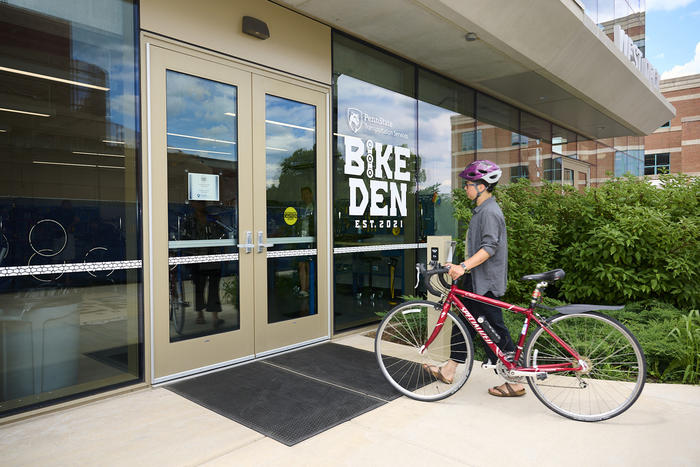
- a bike repair and bike maintenance facility on campus (pictured below);

The Bike Den, a bike repair and bike maintenance facility on the University Park campus
Penn State Transportation services hosts an informative website on bicycling, bike repair, bus and shuttle services., and campus Lyft programs.
Penn State University Park has a gold level certified bicycle friendly university rating from The League of American Bicyclists based on Campus Roadway & On-Road Bicycle Network, Campus Off-Road Bicycle Network, Bicycle-Related Facilities, Engineering Policies and Design Standards, End-of-Trip Facilities for Bicyclists, Bicycle Parking and Storage, and Multi-Modal Transportation Accommodations.
Learn more about Penn State’s progress on the UN’s Sustainable Development Goals on the SDG Progress page HERE, and learn more about work on SDG 11 HERE.
Yes, the university promotes and allows remote work/telecommuting as a standard practice and has a policy on Staff Flexible Work Arrangements. Penn State employees have a vast scope of remote and hybrid options.
The university acknowledges that Flexible Work Arrangements can promote productivity and work/life balance by creating a plan for employees who are able to complete their work outside of a university workspace and/or conventional core hours and help to reduce overall greenhouse gas emissions from commuting.
Penn State recognizes the opportunity for flexible work arrangements and the desire for staff employees to create a more balanced working environment. Flexible work arrangements are encouraged if the work needs of the unit can still be met, and the arrangement does not inhibit the University’s essential need for a robust university workspace or on-campus experience.
Penn State defines flexible work as an overarching term that encompasses work arrangements best suited to the needs of the University with consideration for the employee in their effort to balance the demands of work and life. Flexible work can lead to many positive outcomes, including increased retention and engagement of staff, broader and more diverse candidate pools, reduced costs, and decreased environmental impact.
All flexible work decisions for staff at Penn State are framed by several foundational principles:
- All flexible work arrangements must be appropriate for the position and contribute to the University’s mission. Key aspects of the position include the nature of the work, customers served, and the unit, college, or campus’ standards. Flexible work may not be suited to all staff positions.
- An individual’s flexible work arrangement must be neutral or beneficial in its effect on customers and colleagues.
- The standards for evaluating flexible work requests are established at the level of the unit/college/campus and carried out equitably.
- Parameters on flexible work arrangements are set by unit/college/campus leaders, and individual requests are reviewed by supervisors, HR, and a designated unit approver. Staff members must receive approval to begin a new flexible work arrangement.
- Flexible work arrangements must be documented in Workday (cloud-based software used to manage human resources including recruiting, employee time tracking, compensation, and employee team management).
- A flexible work arrangement can be changed or discontinued by a supervisor or unit/college/campus leader at any time.
Considerations for flexible work arrangements and details on compliance requirements, modification and discontinuation of arrangements, employee benefits, University policies, and insurance coverage are available in Policy HR107 Staff Flexible Work Arrangements. The policy provides guidance to unit executives regarding how to create and implement Flexible Work Arrangements for staff employees if the unit executive determines that such arrangements are appropriate for their units. Policy HR107 states that flexible work arrangements include a variety of options that meet the University’s operational needs while allowing the employee to successfully balance work and life demands. The following flexible work arrangement examples is not a comprehensive list, and is not indicative of arrangements that will be viable for every employee; it is provided solely as an aid for plan development:
- 100% remote work.
- Hybrid Schedule – A combination of time spent working remotely, and in a university-controlled office.
- Staggered start and end times.
- Alternative shifts.
- Compressed schedules, such as four 10-hour days.
- Mid-day flex time. For example, working 8:00am-12:00pm, on break between 12:00pm-2:00pm, and then working 2:00pm-6:00pm.
- Core hours with a variable schedule, which is where an employee must be present during specified core hours determined by the supervisor but may adjust their arrival and departure times each day (e.g., set office coverage between 10:00am-2:00pm every workday).
Prior to the pandemic, Penn State offered telecommuting options. These options were expanded and continue to evolve by recommendations drafted by Penn State’s Remote Work Task Force. This policy and practice has greatly reduced the need for commuting.
Learn more about Penn State’s progress on the UN’s Sustainable Development Goals on the SDG Progress page HERE, and learn more about work on SDG 11 HERE.
Penn State provides discounts for employees to offset costs associated with moving and relocation and for financial and real estate services to help employees find housing within their budgets, and subsidized commuting options for employees who choose to live in outlying communities. For some staff positions, the University offers free housing on campus at no cost to staff, such as residence life coordinators and visiting faculty.
Learn more about Penn State’s progress on the UN’s Sustainable Development Goals on the SDG Progress page HERE, and learn more about work on SDG 11 HERE.
Yes, Penn State does provide a range of affordable housing for students. There are a vast scope of on-campus housing options, and resources to help students find off-campus housing within their budget.
On November 7, 2024, the University announced plans to build a 1,500-bed affordable housing development to meet the needs of students attending the University Park campus.
For students in crisis or in need of financial assistance, the University has a generous Student Emergency Fund. Funds are typically used to address acute financial stress, covering rent or temporary housing, along with other essential needs.
96% of Pennsylvanians live within 30 miles of a Penn State location providing the opportunity for Pennsylvania students to remain in their home communities.
Learn more about Penn State’s progress on the UN’s Sustainable Development Goals on the SDG Progress page HERE, and learn more about work on SDG 11 HERE.
Yes, the Penn State University Park campus has prioritized pedestrian access to campus in the campus master plan. Penn State’s Guiding Principles for Campus Planning include 52 statements that establish planning direction for University Park with a rationale of the values that are foundational to the built environment. Eight of the 52 statements directly address the pedestrian mode:
- Advance the ideal of a pedestrian centered campus by maintaining and improving the major pedestrian and open space corridors and in the campus core.
- Maintain and expand coherent, efficient, and safe network of walkways. Connect all destinations on campus.
- Maintain and enhance pedestrian-friendly campus streets (comfortable, attractive, and safe).
- Provide accessible routes throughout campus and into all buildings.
- Provide accommodations for pedestrians, bicycles, and transit to enhance the pedestrian centered campus experience of the academic core.
- Provide appropriate accommodations for emergency vehicles, service access, and those with enhanced mobility needs.
- Locate the majority of parking resources at the campus perimeter with dependable and comfortable transit service and bicycle accommodations to promote a pedestrian-oriented campus.
- Provide separation of vehicle and pedestrian traffic where major conflicts exist to enhance personal safety
Campus is still active for cars traveling on a main thoroughfare on campus as part of campus master plan to reestablish pedestrian zones. Additionally, a Safe Walk Program has been established to promote campus safety and pedestrian walkability at night.
All 20 Commonwealth campuses keep parking on the periphery with a majority of routes on the body of campus as walk-only paths.
Campus maps of all campuses show numerous pedestrian-only walkways. Three of the 23 are pictured below:

Altoona Campus

Brandywine Campus

Scranton Campus
Learn more about Penn State’s progress on the UN’s Sustainable Development Goals on the SDG Progress page HERE, and learn more about work on SDG 11 HERE.
Yes, the university works with local authorities within which all campuses operate. An example of this is Penn State’s Pennsylvania Housing Research Center (PHRC) which provides and facilitates education, training, innovation, research, and dissemination to the residential construction industry for the purpose of improving the quality and affordability of housing. The PHRC collaboratively engages with the residential construction industry to catalyze advancements in home building and addresses a range of topics relevant to the home building industry to reach a diverse audience: builders, building code officials, remodelers/renovators, architects, developers, engineers, planners, landscape architects, local government officials, educators, etc. to provide professional development and continuing education.
Additionally, Penn State partners with the State College Community Land Trust through PHRC and the Hamer Center for Community Design to support and advance affordable housing for local residents.
Learn more about Penn State’s progress on the UN’s Sustainable Development Goals on the SDG Progress page HERE, and learn more about work on SDG 11 HERE.
Yes, the university does build new buildings to sustainable standards. It is a requirement at Penn State to build all new buildings to LEED standards as described in the 2019 LEED v4 policy.
Penn State is a world leader in sustainable building design and standards with 48 buildings that are, at minimum, LEED certified. An additional 19 are pending certification. The current listing of LEED buildings can be found at https://sustainability.psu.edu/campus-efforts/operations/green-buildings/
Recent LEED building additions include:
Learn more about Penn State’s progress on the UN’s Sustainable Development Goals on the SDG Progress page HERE, and learn more about work on SDG 11 HERE.
Yes, Penn State builds on brownfield sites, where possible. As outlined in the new Capital Plan, campus building projects are focused on prior Capital plan renovations, re-building, and on system renewals on existing sites. Renovations and rebuilding are considered brownfield building based on global standards.
While Penn State pursues sustainable and LEED-certified new construction, there is no explicit policy prioritizing brownfield redevelopment. Most building projects focus on sustainable design and infill development but not specifically on brownfields.
Recent examples of brownfield construction:
- Susan Welch Liberal Arts Building is using an innovative design that takes into account site constraints — such as zoning height restrictions, mature tree locations, connections to existing sidewalk networks and service needs — along with the desire for a cohesive design with adjacent buildings.
- A renovation of the East Hall residential halls took place instead of building in a new location.
- Animal, Veterinary and Biomedical Sciences Building was built on site of former Henning Building.
- Chemical and Biomedical Engineering Building was built on the site of former Fenske Laboratory.
Learn more about Penn State’s progress on the UN’s Sustainable Development Goals on the SDG Progress page HERE, and learn more about work on SDG 11 HERE.
About this SDG
Targets & Indicators
Target 11.1: By 2030, ensure access for all to adequate, safe and affordable housing and basic services and upgrade slums
- Indicator 11.1.1: Proportion of urban population living in slums, informal settlements or inadequate housing
Target 11.2: By 2030, provide access to safe, affordable, accessible and sustainable transport systems for all, improving road safety, notably by expanding public transport, with special attention to the needs of those in vulnerable situations, women, children, persons with disabilities and older persons
- Indicator 11.2.1: Proportion of population that has convenient access to public transport, by sex, age and persons with disabilities
Target 11.3: By 2030, enhance inclusive and sustainable urbanization and capacity for participatory, integrated and sustainable human settlement planning and management in all countries
- Indicator 11.3.1: Ratio of land consumption rate to population growth rate
- Indicator 11.3.2: Proportion of cities with a direct participation structure of civil society in urban planning and management that operate regularly and democratically
Target 11.4: Strengthen efforts to protect and safeguard the world’s cultural and natural heritage
- Indicator 11.4.1: Total per capita expenditure on the preservation, protection and conservation of all cultural and natural heritage, by source of funding (public, private), type of heritage (cultural, natural) and level of government (national, regional, and local/municipal)
Target 11.5: By 2030, significantly reduce the number of deaths and the number of people affected and substantially decrease the direct economic losses relative to global gross domestic product caused by disasters, including water-related disasters, with a focus on protecting the poor and people in vulnerable situations
- Indicator 11.5.1: Number of deaths, missing persons and directly affected persons attributed to disasters per 100,000 population
- Indicator 11.5.2: Direct economic loss attributed to disasters in relation to global gross domestic product (GDP)
- Indicator 11.5.3: (a) Damage to critical infrastructure and (b) number of disruptions to basic services, attributed to disasters
Target 11.6: By 2030, reduce the adverse per capita environmental impact of cities, including by paying special attention to air quality and municipal and other waste management
- Indicator 11.6.1: Proportion of municipal solid waste collected and managed in controlled facilities out of total municipal waste generated, by cities
- Indicator 11.6.2: Annual mean levels of fine particulate matter (e.g. PM2.5 and PM10) in cities (population weighted)
Target 11.7: By 2030, provide universal access to safe, inclusive and accessible, green and public spaces, in particular for women and children, older persons and persons with disabilities
- Indicator 11.7.1: Average share of the built-up area of cities that is open space for public use for all, by sex, age and persons with disabilities See metadata :
- Indicator 11.7.2: Proportion of persons victim of physical or sexual harassment, by sex, age, disability status and place of occurrence, in the previous 12 months
Target 11.a: Support positive economic, social and environmental links between urban, peri-urban and rural areas by strengthening national and regional development planning
- Indicator 11.a.1: Number of countries that have national urban policies or regional development plans that (a) respond to population dynamics; (b) ensure balanced territorial development; and (c) increase local fiscal space
Target 11.b: By 2020, substantially increase the number of cities and human settlements adopting and implementing integrated policies and plans towards inclusion, resource efficiency, mitigation and adaptation to climate change, resilience to disasters, and develop and implement, in line with the Sendai Framework for Disaster Risk Reduction 2015–2030, holistic disaster risk management at all levels
- Indicator 11.b.1: Number of countries that adopt and implement national disaster risk reduction strategies in line with the Sendai Framework for Disaster Risk Reduction 2015–2030
- Indicator 11.b.2: Proportion of local governments that adopt and implement local disaster risk reduction strategies in line with national disaster risk reduction strategies
Target 11.c: Support least developed countries, including through financial and technical assistance, in building sustainable and resilient buildings utilizing local materials