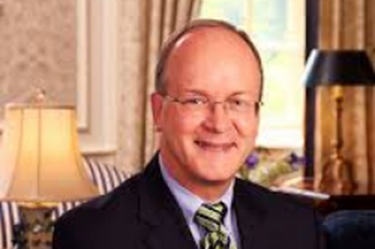
Mia Ray, EnvironMentors Program Coordinator
Mia Ray has seen Penn State’s EnvironMentors program from both sides—first as a staff mentor and now as the program’s coordinator. Originally connected to the program while working at Penn State Hershey, she joined as a mentor shortly after graduating from college, guiding her first mentee through the process of developing and presenting an environmental research project. That early experience showed her not only the power of mentorship, but also the unique way EnvironMentors helps students from underrepresented backgrounds see themselves in science and higher education.
As coordinator, Ray now oversees the program across multiple campuses, building the network of high school students, Penn State undergraduate and graduate mentors, and faculty members who together form the foundation of each research project. She manages logistics, strengthens partnerships, and creates spaces where students feel seen, supported, and empowered to explore sustainability through their own lenses.
Her passion lies in using mentorship as a tool for equity and opportunity: helping students grow confidence in their voices, exposing them to college-level research, and showing them that science and sustainability are not distant, abstract concepts but part of their everyday lives.
(This conversation has been edited for length and clarity.)
Since you’ve been both an EnvironMentor and now the program coordinator, how has your perspective on the program evolved?
When I first started in the EnvironMentors program, I had just begun my current job here at Hershey Medical Center. My boss talked about the program and how it was a great opportunity, and I had just earned my bachelor’s degree. I became a staff mentor and my first mentee changed everything.
That experience was so different from being the program manager. In that mentor role, you see how the things happening behind the scenes play out in how you’re mentoring the student. I could use the tools the program provided, but also put my own fun, cool spin on it that made sense for me and for the mentee.
As a program manager, you see the logistics of everything—from recruitment to programming and planning to the relationships you’re building. You’re building relationships not just with mentees, but with faculty mentors, undergraduate mentors, and parents—letting them know that in this program their child is safe, looked after, and gaining the skills to be competitive in this world. Seeing it from both sides, you gain so many skills and so much perspective that you take wherever you go.
What inspired you to personally stay connected with EnvironMentors after your time as a mentor?
The look on my mentee’s face when she experienced a symposium for the first time was unforgettable. A symposium is basically an event where students get to share their projects, present posters, and talk about their ideas with others—it’s like a showcase of what they’ve been working on.
When she presented, she won the EnvironMentors Community Impact Award. These were all firsts for her. At the beginning she was skeptical, saying, “I don’t know if I can do this.” And then everything made sense and lit up in her brain.
A lot of these kids don’t really have opportunities to do projects like this, and this program changes that narrative. It creates experiences that make you see the world differently.
What do you see as the most rewarding part of working with these students through this program?
Being able to give students opportunities. High schoolers aren’t typically thinking, “I’m going to do a research project,” and then they leave the program saying, “I want to get into science; I care about this.” The entire EnvironMentors team talks about how to equip mentees—and undergraduate and graduate mentors—with skills they can take beyond the program.
I love being the disseminator of information and creating events and opportunities to learn and advocate—teaching how to write an email, present yourself, market yourself, and advocate for yourself. Those skills matter, especially when students are transitioning from high school to college.
How does EnvironMentors connect high school students with Penn State faculty, grad students, or community partners?
We’re thorough with our application process. We identify students based on their skills and how they learn, not just classes taken. Then there’s a match period: pairing students with a faculty mentor who fits their scientific goals and an undergraduate mentor who connects with their day-to-day life.
It’s a research triad. Undergrads meet weekly with the mentee, then faculty joins. It’s not just a “throw you here” approach—it’s “this is what you enjoy; here’s a mentor whose interests align, and here’s an undergrad who understands the whole you.”
We’re also part of a national network as a chapter of the Global Council for Science and the Environment’s EnvironMentors. First-, second-, and third-place winners can go to the International Science Fair. Last year we went to Chicago for a sustainability research congress. At our annual symposium, students present, connect, and celebrate.
Community-wise, we’ve hosted events like our MLK celebration with a vision-board workshop and a live podcast with environmental organizer Anthony David. It’s about broadening the circle of support.
How does EnvironMentors help students from underrepresented or underprivileged communities access STEM opportunities, and how does that connect to quality education and reduced inequalities?
Students tell us, “I have never really thought about sustainability or environmental justice when I’m walking to school—I just walk to school.” But in this program, they start to see things differently. They begin to notice the bigger picture—the sidewalks and bus routes that make it possible to get to school, the trees and green spaces along the way, and how things like air quality, safety, and neighborhood design connect to equity and the environment. It’s about realizing that sustainability isn’t abstract; it’s part of their everyday lives.
We meet students where they are. We don’t force them into a box. We understand their viewpoint and accept every facet of who they are. Students learn that they don’t have to change themselves because they think that’s how scientists are supposed to act. Instead, we ask, “What do you like? Okay, let’s figure out how to bring that vision to life.”
We pair students with faculty or undergraduate mentors they’ll most likely connect with, and we create opportunities for them to get to know others—and themselves—better. You have to look at a person holistically to provide quality education. This program creates safe spaces to say, “I don’t know,” or “I’m not sure,” or “I want to do this,” while providing both skills and autonomy. It’s not a restrictive space like people often think science can be; it’s more open and empowering.
Thinking beyond the program, what kind of skills, confidence, and opportunities do students gain that stick with them after they complete their time in EnvironMentors?
A big one is public speaking. We give pointers—don’t read straight off your poster; think of it as a conversation with a friend—and it clicks. One of my mentees is at Juniata College now. She put the poster together from start to finish and presented it at the EnvironMentors Research Symposium. In her first year at Juniata, she told her teacher, “I can do this, because I have done it before.”
They gain research skills—coming up with a question, methods, analyzing results—hard skills that nobody can take away. They learn to build connections; mentorship transcends time. Laying this foundation early helps you build more relationships as time goes on. Collaboration is so important in science, and it starts with knowing how to build a relationship in an authentic way.
They also learn to accept different cultures and build community across campuses. And they learn time management and organization. If I had learned to organize like this in high school, I probably would have had fewer all-nighters in college!
What partnerships have been most impactful in advancing the program’s sustainability and equity goals?
Faculty partnerships are big. When faculty believe in the program and want to educate students, it sustains the program and gets more research out there—bioplastics, environmental justice, and air quality monitoring. Faculty members are part of the heart of this program.
Undergraduate mentors are also critical. They bring fresh ideas and can be the difference between an experience that sticks or not.
And the greater Penn State community is part of this effort—helping students grow through college- and career-readiness workshops, guest speakers, lab tours, and field trips that connect what they’re learning to real-world opportunities. They’ve seen the impact and what students are walking away with. Partnerships sustain us.
Is there a specific student project or mentorship story that really captures the program’s impact?
We started with the Steelton School District in Harrisburg and asked, “Which students would be interested in this program?” That’s when one student came up. He was a poet. He didn’t know how poetry and the environment could go together, but he was interested. So, we asked him what he sees about his environment that he doesn’t like, and he said, “There’s a steel mill—probably a hazard for the air,” so we looked at articles and air-quality data together with an undergraduate mentor.
He often felt like he didn’t know enough. So, we worked as a team to help him feel safe enough to write a poem about complex air-quality data. We created a “data to poetry” framework.
He said, “I can’t believe I did that. I can’t believe you convinced me that art and science go together.” He felt so seen. For a kid who wrote poems in his phone … to put it on a poster and have everyone say “wow”—that’s the difference between giving someone work and giving someone an opportunity.
As a mentor, sometimes you do unconventional things—pause meetings when someone isn’t mentally there, make a playlist of poets—anything to help a student get from point A to B to C. That’s what this program does.
Do you see student projects tying into broader global challenges like climate action, life on land, or partnerships? Which SDGs do EnvironMentors most directly advance?
A lot of our projects look at sustainability—bioplastics, biofuels, biodegradable materials—and the impacts of climate change and disparities between communities.
EnvironMentors really touches climate action and reducing waste. It comes from giving students the opportunity to express their concerns and interests—whether that’s protecting pollinators, sampling air quality, or working with PurpleAir sensors.
Projects are thought-provoking. The first-place winner at our symposium did a poster on replacing a step in cement production with nuclear energy. She found huge emissions reductions—what started as just an idea turned into a project that makes you think about steps we can take to improve our climate.
Young people have the platform to say, “This is what’s happening. I’m seeing this. And we need to do something.” That’s the role we play: giving them a stage to connect their research to the bigger picture.
Are there ways for Penn State students not directly in the program to contribute or get involved?
Apply. Middle school to senior year—if you’re interested or even just open to learning, apply.
For undergrads and faculty, we’re launching an Undergraduate Mentor Advisory Board to help the team reach students and create effective mentorship strategies.
And even if you can’t commit to full mentorship, attend our events: MLK Day, Black History Month, skills workshops. And especially our symposium in April—this year at Penn State Harrisburg with a Capitol tour and potential conversations with legislators about environmental health in Pennsylvania. Come support!
Looking 5–10 years down the road, what’s your vision for how EnvironMentors can grow?
Everyone was raised differently and faces different challenges, especially underserved and underrepresented students.
EnvironMentors can be the blueprint for how mentors respond when students are navigating crises, while still helping them show themselves in a project they love.
I see students and mentors exposing environmental issues right in front of our faces—State College, Harrisburg, Schuylkill—and having a say in advocating for better policies: cleaner air, cleaner water, access to resources. Young people will eagerly step out of thinking, “This is a little project,” and into, “This has implications for future generations.” That’s where we’re going.
Are there any upcoming initiatives, projects, or goals you’re really looking forward to?
We offer workshops for mentees on real-world skills—everything from writing professional emails to learning Excel and other tools that help them succeed.
This year, our symposium will be at Penn State Harrisburg. Students will tour the campus, visit the Capitol, and might even meet with legislators to talk about why environmental health matters in Pennsylvania. It’s such a powerful way for them to see how their voices can shape policy.
If you had to sum up the role EnvironMentors plays in advancing sustainability at Penn State in a sentence or two, what would you say?
This program amplifies youth voices to bring sustainability and climate issues to light in Pennsylvania.
It’s a mechanism of knowledge—showing that even the youngest minds know what’s going on—and adults in power can’t run or hide from this, because the young people have something to say.