The Penn’s Woods Project
For the last fifteen years, Penn State’s faculty have been developing an impactful sustainability curriculum under the banner of the Penn’s Woods Project to take their students on rich educational journeys. During that time, teaching and tenure-line faculty from every University Park College, every Commonwealth campus, and World Campus have come together to share, connect, inspire, and create transformational educational experiences. These champions’ work is represented here. Now that Penn State’s Faculty Senate has developed an attribute to recognize all permanent sustainability classes, we are being even more intentional about supporting this critical curricular development.
Whether you’re a Sustainability Council Chair who wants to host a three-day workshop with field trips to sustainability assets, a departmental champion who wants to host roundtables, or an individual looking for inspiration, these resources are intended to help you meet those outcomes while also fostering a culture of inter- and trans-disciplinarity. We hope to help you understand the context and history of sustainability education and then provide you with tools to develop sustainable curricula, examples of classes, and contacts with previous champions of sustainability education.
Guiding Principles
- Bring together and emphasize a broad range of interdisciplinary faculty expertise;
- Develop a sense of community and a spirit of interdisciplinary cooperation based on an
openness to working across traditional disciplines, and welcome dialogue around a
problem orientation; - Help faculty explore the shift in pedagogy from a paradigm of teacher as expert to
teacher as facilitator of learning, utilizing diverse pedagogical approaches, and becoming
co-learners with students and with each other; - Foster creativity through opportunities to combine professional research and artistic skills
with ethical reflection, personal responsibility, and action, raising questions about daily
life habits as well as long-term institutional policies; - Ground the learning experience of the faculty (and through them, their students) in
awareness of place, of the specific bioregion of which the institution is part, to build
concrete arenas of understanding and meaningful experiences that support motivation; - Build a common language by fostering a standard set of baseline habits and goals that are
communicable and understood on every level; - Build recognition of the urgent environmental challenges and connected economic and
social dimensions, including the opportunities and positive consequences that may flow
from addressing these challenges; then, utilize this recognition to focus on learning
outcomes in the curriculum.
What is Sustainability?
Sustainability is a multidimensional concept with a rich history. Penn State has defined sustainability as “the simultaneous pursuit of human health and happiness, environmental quality, and economic well-being for current and future generations”. The concept of sustainability is ancient, with roots in philosophical and spiritual traditions as well as agricultural practices dating back millennia. Today it is present in nearly every dimension of human life.
Learning Outcomes
Every undergraduate course that carries the sustainability attribute must:
• Define Sustainability – Defines sustainability in a personally, civically, or disciplinary-relevant context to ensure that all stakeholders have a shared understanding and provide a consistent framework for examining concepts, making comparisons, and drawing conclusions systematically. Students should engage with disciplinary-relevant definitions and challenges of sustainability.
In addition to defining sustainability, a course must meet at least one of the following additional sustainability learning objectives (SLOs):
• Analyze Relationships – Distinguish system types (sociocultural, economic, technological, and natural systems) appearing in the literature, attends to temporal
literacy, and directs it through interpersonal literacy to analyze the sustainability of relationships between interconnected systems as they change over time.
• Employ Moral and Ethical Frameworks – Direct student learning into the ethical realm, providing opportunities to spot ethical issues, analyze those issues, and develop and communicate personal, professional, and public moral/ethical positions. It requires systems and temporal literacy while focusing on interpersonal and ethical literacies. Importantly, this SLO is agnostic about ethical metatheories or traditions, enabling courses to use utilitarian-, care-, rights-, values-, spiritually based, or other appropriate frameworks for analysis.
• Cultivate Interpersonal Competency – Utilize others’ ways of knowing and communicating empathetically to engage and motivate diverse stakeholders around sustainability-related challenges and solutions.
• Explore Designs, Solutions, and Changes for a Sustainable Future – Identify, create, advocate for, and/or affect resilient and/or sustainable designs, solutions, or changes in a discipline-relevant context.
A course that carries the sustainability attribute must include at least one course learning
objective (CLO) that demonstrates an enduring course focus on sustainability.
This guidebook could not come at a better time. U.S. higher education faces the immense challenge of relevance and necessity. There is no doubt that our faculty possess incredible skill, talent, and passion to develop the next generation’s ability to meaningfully contribute to society as professionals, citizens of our democracy, and people with individual purpose. But we live in a world of rising costs, deep uncertainty about technology, the emboldening of anti-democratic and anti-scientific actors, a pandemic of loneliness, and the massive disruption to Earth’s natural systems, including the climate crisis and massive biodiversity loss. The challenge of what and how to teach is on all our minds.
“The Penn’s Woods Project: A Sustainable Learning Guide for Educators” shows instructors how to design courses that meet Penn State’s Sustainable Learning/Literacy Outcomes (SLO’s) adopted in 2024 by the Faculty Senate. It provides frameworks for sustainability in the context of interdisciplinary liberal education, sustainability learning outcomes, and examples from nursing, energy engineering, African Studies, geography, music theory, and more.
“The Penn’s Woods Project” is dedicated to the late ecologist and Penn State professor, Chris Uhl, who devoted his life to the healthy relationships of all living beings and influenced thousands of Penn State students to create a more just and verdant world.

Credit: Bernardo Esteves, Revista Piaui
Project Developers

Elizabeth Smith, Climate and Sustainability Education Intern, Based in Undergraduate Education, els6009@psu.edu

Lucy Gustafson, Communications, Social Media & Design Intern, mlg6210@psu.edu
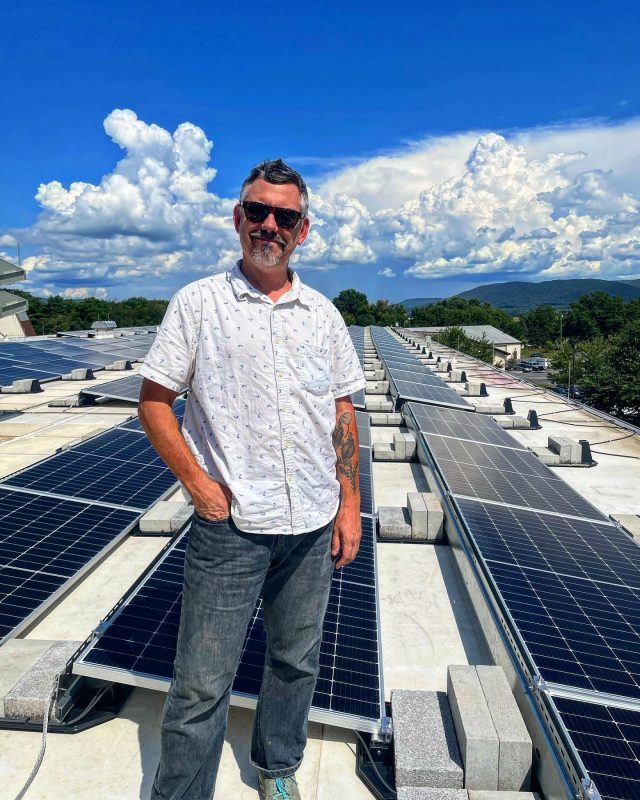
Peter Buck, Director for Education, Co-Director of the Local Climate Action Program, and Co-Leader of Sustain Penn State, Based in Undergraduate Education, peterbuck@psu.edu

Katie Chriest, Associate Director for Strategic Communication, kmc503@psu.edu